Insights We Gathered From India’s Leading Architecture & Design Studios
Over the past year, after collaborating with top architects and designers and delivering a significant volume of luxury wardrobes across premium residential projects, we noticed clear patterns shaping the future of bespoke furniture.
This blog distills these learnings into a concise, high-value guide designed for A&D professionals working on high-end apartments, villas, and penthouses—especially where bespoke wardrobes, wall paneling, and luxury storage systems define the client’s experience.
1. Bespoke vs Modular — The Real ROI Architects Are Focusing On
Across India’s luxury residential segment, studios are moving away from simplistic “per-sqft modular comparisons” and instead evaluating long-term performance.
A bespoke system might cost more upfront, but architects report fewer failures, better aging of materials, cleaner tolerances, and significantly stronger client satisfaction. Modular pre-sets simply cannot accommodate the architectural constraints, concealed services, and varying civil tolerances of premium homes.
The shift is clear: ROI is now measured by lifecycle reliability, not immediate cost.
2. The 7 Wardrobe Mistakes Disrupting Premium Residential Sites
During site reviews, handovers, and post-installation audits, we repeatedly observed seven recurring issues—even in otherwise well-designed homes. These include alignment inconsistencies, improper hardware mapping, tolerance misreads, material warping, inaccurate shutter reveals, poor internal planning, and mismatch between design intent & execution.
Each mistake affects the visual language architects work so hard to build—leading to project delays, last-minute redesigns, or unsatisfactory client experience.
3. A Structured 90-Day Workflow That Reduces Site Stress
Seasoned architects emphasize one truth: predictability creates trust.
A well-structured 90-day process—covering BOQ finalization, prototyping, manufacturing, QC, site coordination, and installation—results in significantly fewer bottlenecks. The absence of proper structure is one of the biggest reasons wardrobes become a stress point in luxury projects.
When workflows are standardized, architects avoid firefighting, site teams stay aligned, and the client experiences a seamless journey.
How Quba Homes Helps Reduce A&D Stress — Value Table
| Architect Pain Point | Common Market Gap | How Quba Supports | Benefit to Architect |
|---|---|---|---|
| Unreliable timelines | Outsourced manufacturing | Structure-driven workflow & clear commitments | Predictable deliveries |
| Unclear BOQs & costing | Vague specifications | Detailed BOQs with finishes & timelines | Faster approvals |
| Communication gaps | Vendor misalignment with site | Organized milestone updates | Smoother execution |
| Generic presentations | One-size-fits-all PPTs | Tailored decks based on design intent | Better client confidence |
| Inconsistent quality | Outsourced fabrication | Controlled, standardized build output | Design intent maintained |
| Installation issues | Unskilled labor | Professional installation team | Stress-free handover |
| Low-grade materials | Mixed or unreliable sources | Authentic, high-grade material selection | Luxury standard consistency |
| Client price comparisons | Low-price modular vendors | Evidence-based value & quality justification | Architect’s reputation stays strong |
| Execution mismatch | Vendors lacking bespoke capability | Precision craftsmanship for custom wardrobes | True-to-design execution |
Final Thoughts
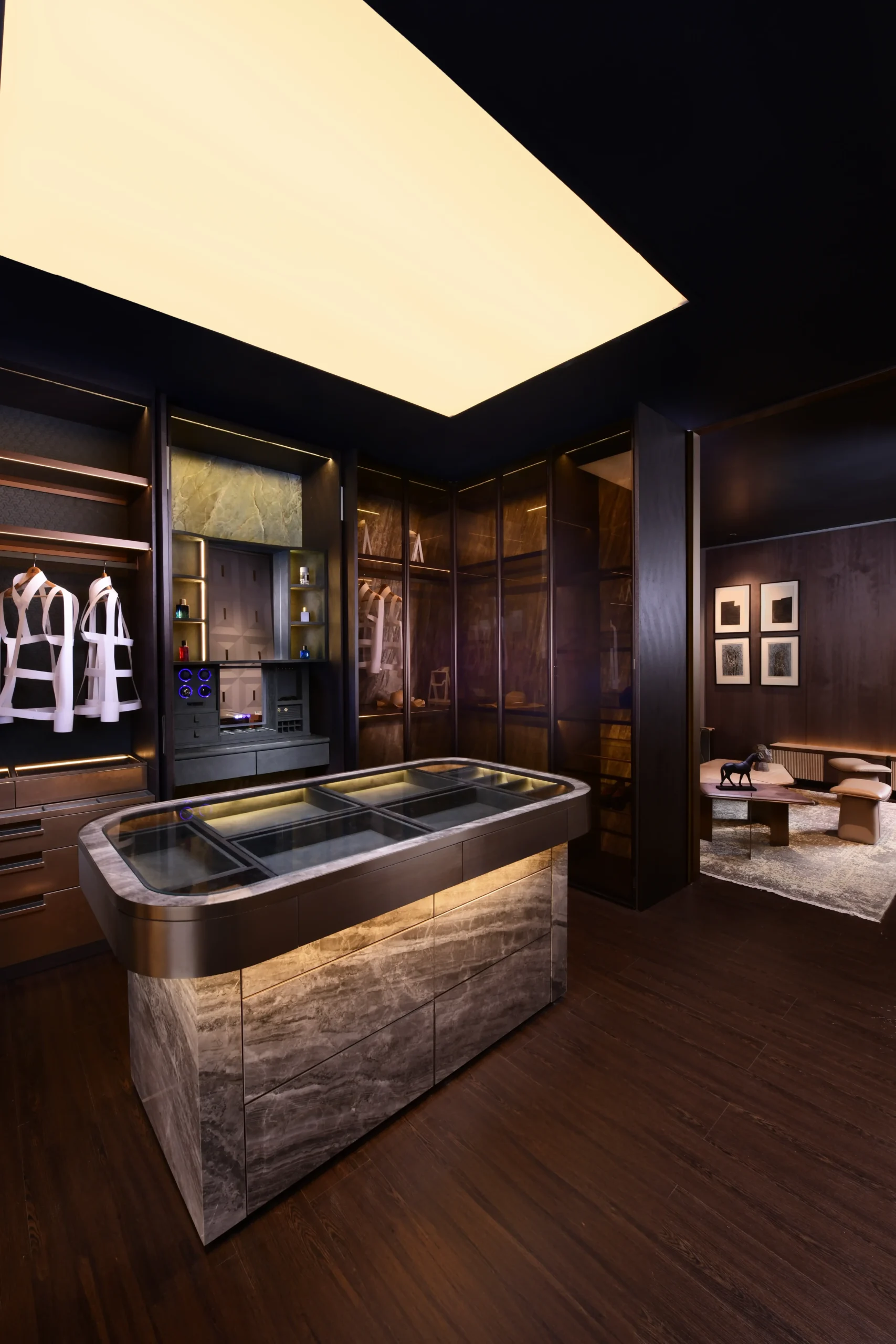
For luxury residences, wardrobes and wall paneling are no longer storage elements—they are architectural experiences. The difference between modular vs bespoke, the accuracy of execution, and the reliability of workflow deeply affect the client’s perception of both design and delivery.
With the insights gathered from India’s leading A&D studios, it’s clear that consistency, communication, and craftsmanship are at the heart of premium project success.